

Bringing you the latest news on media and advertising
Provided by AGP
Cato CEO Peter Goettler Warns Against Heavy AI Rules with Sanjay Puri in the RegulatingAI Podcast
RegulatingAI Podcast
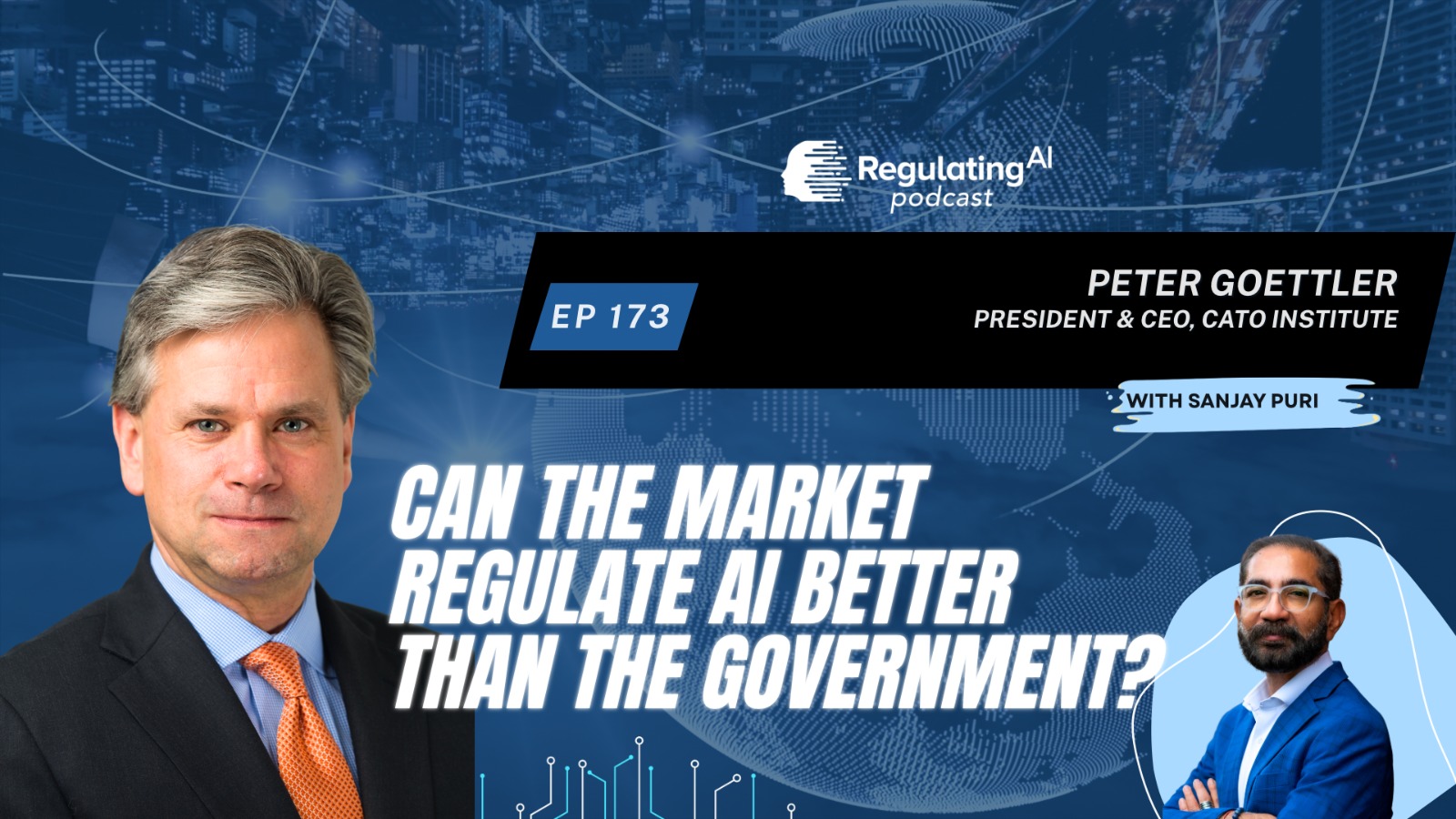
Peter Goettler, President and CEO of the Cato Institute with Sanjay Puri, President of RegulatingAI
Cato CEO Peter Goettler told Sanjay Puri’s RegulatingAI podcast that AI risks are real, but overregulation could hurt innovation and freedom.
AI safety concerns are overblown — and sometimes used as a regulatory excuse.”
WASHINGTON, DC, UNITED STATES, May 11, 2026 /EINPresswire.com/ -- On a recent episode of the RegulatingAI Podcast, host Sanjay Puri interviewed Peter Goettler about artificial intelligence, financial regulation, free speech, and the future of work. Goettler, who leads the Cato Institute, shared a libertarian view on AI governance and warned against giving governments too much control over emerging technologies. He argued that policymakers often overestimate the power of regulation and underestimate the benefits that innovation can bring to society. Throughout the discussion, Goettler stressed that freedom, open debate, and market competition should remain central to AI policy decisions.— Peter Goettler
During the conversation, Goettler reflected on his 22 years on Wall Street and his experience during the 2008 financial crisis. He told Sanjay Puri that many people oversimplify the causes of the crisis by blaming only greedy bankers or irresponsible homeowners. According to him, government policies also played a major role by encouraging risky lending and creating incentives that distorted the market. Goettler said the financial industry already faced heavy oversight from agencies such as the Federal Reserve, SEC, and FINRA before the collapse. He argued that the crisis proved regulation alone cannot prevent major failures. Instead, he said policymakers should learn from history and recognize that interventions can create unintended consequences that make problems worse over time.
Goettler connected those lessons to today’s debate over AI regulation. He warned that governments may move too quickly to control AI without fully understanding the technology or its long-term impact. While he acknowledged that AI carries real risks, he said many fears around the technology remain speculative. He specifically questioned predictions that AI could become an existential threat to humanity. Goettler compared current fears about AI to earlier concerns about the printing press, automobiles, and the internet. In each case, he said society worried about job losses and social disruption, but the technology eventually created more opportunities and improved living standards. He added that people naturally focus on worst-case scenarios and often ignore the potential benefits of innovation.
The interview also explored issues such as algorithmic bias, deepfakes, and AI safety. Goettler agreed that AI systems can cause harm if they produce discriminatory outcomes or spread false information. However, he argued that many of those problems already fall under existing laws related to discrimination, fraud, and public safety. He pointed out that AI may actually help reduce human bias because developers can quickly adjust flawed algorithms, while changing human behavior can take years or even generations. Goettler also defended strong free speech protections for AI-generated content. Discussing deepfakes and political misinformation, he warned that broad government restrictions could threaten First Amendment rights and limit satire or political expression. He said false information online often gets exposed quickly, especially in the modern internet age.
Another major topic on the RegulatingAI Podcast was the impact of AI on jobs and the economy. Goettler admitted that AI could replace large numbers of white-collar workers and create painful transitions for many professionals. He acknowledged that financial institutions and corporations may eventually operate with far fewer employees because AI tools can improve productivity. However, he argued that technological change has historically created new industries and new forms of employment. Goettler expressed skepticism about proposals such as universal basic income, saying the financial costs would be difficult for governments to sustain. Instead, he emphasized personal responsibility, adaptability, and economic freedom as better ways to handle technological disruption.
Toward the end of the interview, Sanjay Puri asked Peter Goettler about national security concerns and the growing power of AI companies. Goettler said he worries about governments pressuring private companies to hand over technology or limiting innovation in the name of safety. He also argued that markets often regulate themselves because companies do not want to release dangerous products that could damage their reputation or create public harm. In a rapid-fire round, Goettler called AI safety fears “overblown,” supported federal coordination of AI rules across states, and said markets should remain the primary force guiding AI development. The conversation highlighted the growing divide between advocates of stronger AI oversight and those who believe innovation should move forward with minimal government interference.
Upasana Das
Knowledge Networks
email us here
Visit us on social media:
LinkedIn
Instagram
Facebook
YouTube
X
Legal Disclaimer:
EIN Presswire provides this news content "as is" without warranty of any kind. We do not accept any responsibility or liability for the accuracy, content, images, videos, licenses, completeness, legality, or reliability of the information contained in this article. If you have any complaints or copyright issues related to this article, kindly contact the author above.
